Recipe: Pickled Onions

Want to feast your eyes on something beautiful? Look no further. Behold and gaze upon one of the most beautiful sights known to the food preservation world:

I had to make it extra-big. It's just so pretty.
I know they look a little bit like strawberries. I know they look like Valentine's Day in a jar. But those, my friends, are pickled red onions about to be processed in a water bath.

As you may remember, I like canning in small batches. It takes the fear out of it for me, and makes it a fun, quick project instead of a long, tedious one. I filled three half-pint jars with pickled onions, processed them, and had the kitchen tidied up and from start to finish it only took me about an hour.

If you love pickled onions but don't love canning (or just aren't ready to try), this recipe is for you. Pickled onions can be made without canning and will keep just fine in the fridge for several weeks.


Elderberry Extract: How to Make it, and Why

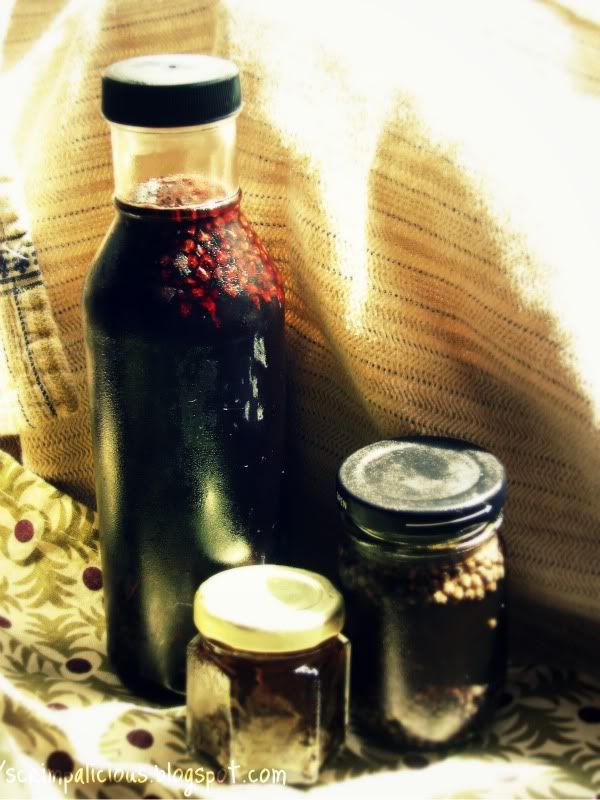
Do you know what this is?


It's medicine. But not just any medicine. As you may have inferred from the reused bottles (salad dressing, curry paste, and jam, respectively), this medicine is 100% homemade. 

The three bottles above hold three different kinds of extract. Just like vanilla extract (which you can make by this same method, by the way), the method can be simplified down to "add some plant matter to some vodka and wait."  Today, what I'm going to talk about is the tall bottle of elderberry extract--how to make elderberry extract, and why you should.

Raw Milk Ohio: Part 2

For Part 1, go here.


When we last saw our intrepid heroes, Mr. and Mrs. Scrimp were on their way to the market to meet the mysterious "Joshua," a raw milk distributor who was to weigh them in the balance and see if they were worthy of receiving his goods. 

In all seriousness, though, we weren't really expecting things to be that crazy. Maybe a five minute chat about the summary of the contract, a few minutes reading it over, a signature, and we'd be on our merry way.

Well, not quite.


Menu Planning Monday & Free Menu Planner

Every Thursday, we get a big load of food from our CSA. On Saturdays, we go to the farmers market and fill in any gaps that we feel like our CSA didn't fill for the week. Then, it's time to eat!

However, if we don't plan out what we're going to do with all of our delicious produce, I know we're going to lose some of it to rot. Food from a CSA usually doesn't last as long as food from the grocery store, because it is almost always perfectly ripe when picked. So, it's important to have a plan for how we're going to use the delicious bounty of our local harvest without letting any of it go to waste.

I used to plan a menu and then go grocery shopping based on that plan. Now that we eat almost exclusively local, seasonal foods (at least during the harvest months, when the only non-local things we eat are organic canned beans and coconut milk), I have to reverse the process. Someone else picks the food I'm going to get, and I have to be creative to make it all work for us. It's been an exciting adventure trying to figure out how to do that.


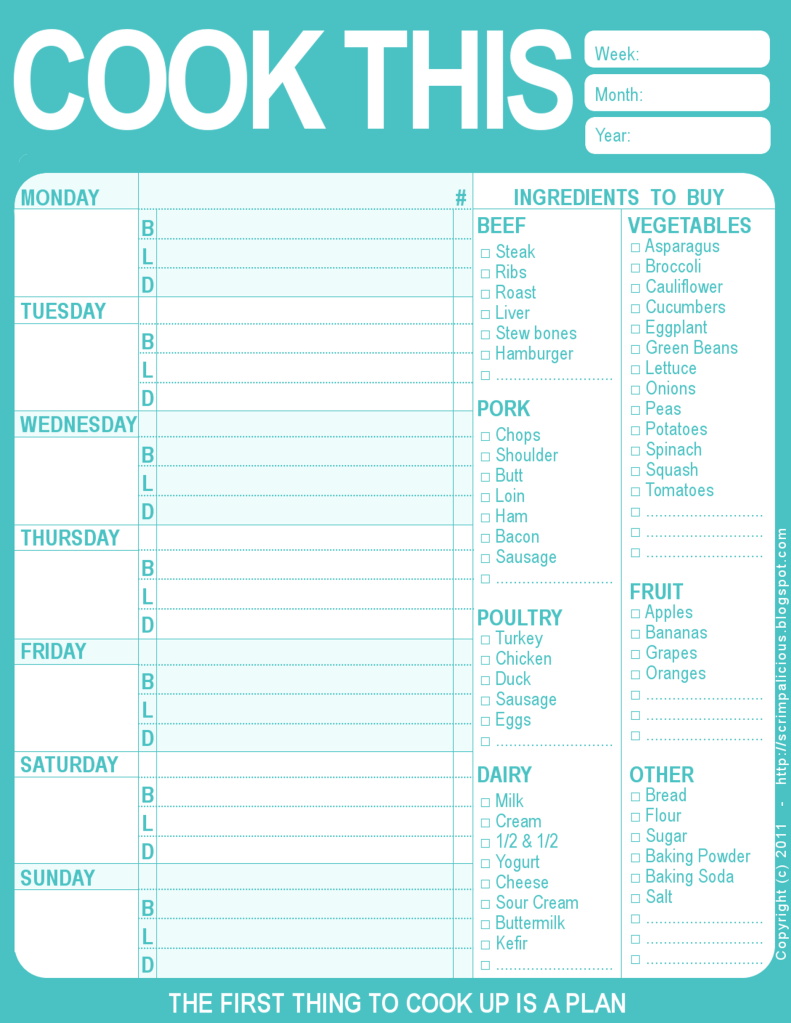
Eventually what I did was to come up with a dual-function shopping and menu planning list (as you see above). It works in either way--you can fill in all your available ingredients and then make a menu plan from those, or you can write a menu plan and choose the ingredients you'll need to buy to make it. But it's all there together so you always know exactly what food you have or need, and what you're going to be eating.

I've included my list (a knockoff of the Anthropologie style "What to Eat" and "All Out Of" notepads) at the bottom of this post as a downloadable file so that you can print it out and use it too! It's been formatted to fit a full 81/2 x 11" page so you have plenty of room for writing and can store week-by-week copies in a binder if you want.

Want to see how I do it? Below the cut, I've shared this week's food supply and the menu I made out of it so you can see what I'm talking about.


Anthropologie Rosette Bedspread Tutorial

I am almost speechless with admiration over this beautiful Anthropologie-inspired duvet made by Kirstin of kojodesigns. I don't know what I love most about it--the awesome low price? The fact that it completely captures the beautiful appeal of the much more expensive original? The simplicity of the project?


Nope, I can't decide. I love everything about it equally.

Kirstin used jersey (pillaged from t-shirts and some king-sized sheets). Sarah at This Crazy Blessed Life recreated the look using Kirstin's tutorial, white muslin from Wal-Mart, and an Ikea duvet for a total cost of (brace yourself) $53!

Compare that to $288 for the king-sized version at Anthropologie and you can color me totally impressed.

Ballard Hacking: Homemade Weathervane

One of the things I love to see more than anything else is ideas and inspiration for how to copy upscale, expensive things accurately and on the cheap. For instance, I cannot even handle the way that Tracy from Tracy's Trinkets and Treasures created a free  version of Ballard's $149 horse weather vane.


Tracy's horse is made out of wood and paper. Ballard's horse is made out of wood and cast iron. But, displayed on a shelf out of reach where it isn't likely to be damaged, does it really matter if your weather vane is just cardstock?

I think not.

Check out the whole process over at Tracy's Trinkets and Treasures.

Raw Milk Ohio: A Thrilling Tale of A Covert Operation, Part 1

Recently, as those who follow us on Facebook are already aware, Mr. Scrimp and I purchased an interest in a local dairy herd. We did this because we really wanted to start drinking raw milk. But, because Ohio raw milk laws prohibit sales of unpasteurized milk, we had to work pretty hard to find a safe, legal source.

Photo credit

I am going to share the story of how we came to be investors in a cow (or group of cows), because I want everyone to know what we had to go through here in Ohio to exercise our rights to food choice and food freedom. Sadly, I will not be able to share the real names of anyone involved in this story, because even though no laws were broken, the ODA have still been known to open investigations that often end in the unjust arrests of farmers involved in providing raw milk here.

The whole thing felt like some sort of drug deal or espionage. And, although everything we did was legal, according to our state and federal governments, it sort of was.


LinkWithin

Related Posts Plugin for WordPress, Blogger...