Showing posts with label Preserving Food. Show all posts

Preparing for Winter

Winter is on its way and for the last month or so, I've been feeling this really strange sense of impending gloom and cold. The weather has been gorgeous--warm, dry (but not too dry), pleasant breezes and all the sorts of things that make you want to spend time sitting outside soaking up vitamin D and fresh air. I can't say why, when I go out into that, my urge is to run to the farmers market and snatch up every preservable fresh vegetable I see, but the urge is there nonetheless.

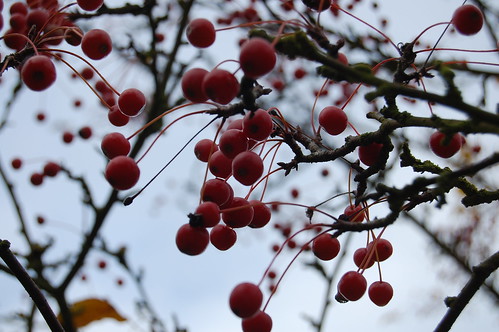
Can you eat these? I don't know but something deep inside of me wants to
pick them all and hide them in a hole in the ground. For later. Source.

And I know I'm not the only one. I've asked other people and, at least here in the midwest, it seems to be a pretty universal feeling among the seasonal eating crowd.

Part of this, I think, is that the more we settle in to a truly seasonal diet, the more aware we become of the lack of certain foods in the winter. Last winter we didn't really prepare much at all and, once the stored winter vegetables ran out at the market, we spent a few months living on pretty much nothing but meat, hydroponic lettuce, and the occasional bag of frozen vegetables from Whole Foods. I am still sick of lettuce.

So this year, we're preparing. We don't have the time, space, or ready cash to really put an entire winter's worth of food away, but we're doing what we can to buy up fresh vegetables now in order to save them for later. I've been doing some canning and we were very excited to find a brand new deep freezer at a yard sale a month ago for less than a hundred dollars which is letting us freeze and store lots more meat and vegetables than before.

What are you doing to get ready for winter?

Recipe/Tutorial: Canned Peaches

Edit: This recipe has been updated to include a variation using honey in place of white sugar.

I just finished doing a little canning, and it was so quick and easy that I felt like I just had to share with you how to take advantage of the tail end of fresh peach season. That's right--today's easy-peasy things you should always do at home lesson is how to make canned peaches.


The only special tools you absolutely need for this are canning jars and a pot that will fit them plus enough water to cover them by at LEAST half an inch. I used 1/2 pint jelly jars from Wal-Mart ($8/dozen) and a soup pot.


Review: Canning For a New Generation

For Christmas this year, my brother and his wife gave Mr. Scrimp and I a copy of Lianna Krissoff's Canning for a New Generation. Being readers of Scrimpalicious, they knew about my sometime love affair with canning, and also that Mr. Scrimp and I tend to be, well, I hate the word "foodie" because it's a silly-sounding word, but if the shoe fits...


First of all, this book is beautiful. It's worth owning just for the eye candy, in my opinion. From the appealing cover to the photographs sprinkled lavishly throughout, this book is just pretty. I would (and already have) just leave it on my coffee table for people to flip through as an aesthetic pleasure.


Recipe: Bacon - Special Guest Post by Mr. Scrimp!

Mr. Scrimp here. Let’s take a moment to talk about meat. 


Specifically, bacon.

I feel, unfortunately, that bacon has sort of jumped the shark as of late.
Bacon ice-cream, bacon vodka, and the accompanying bacontini. I’m not saying any of these things are bad. On the contrary, there is a certain appeal to the idea of a salty/meaty vodka concoction. This doesn’t change the fact that while a lot of people are talking about a lot of bacon, very few people are talking about the quality of the bacon that they eat.
I’ll go out on a limb and guess that you’ve never eaten good bacon. Ask yourself this question; “Did I buy the bacon in a supermarket?” If you answered yes, then the bacon was almost definitely bad. OK, let’s be honest, even bad bacon is still pretty tasty. However, good bacon is one of the greatest things you will ever eat and it is astonishingly easy to make, and I promise that you’ll have problems going back to the watery strips that people try to tell you is bacon.

Michael Ruhlman, a native of my own hometown, wrote an excellent book on charcuterie (called, appropriately, Charcuterie), which I highly recommend you purchase. At the most basic level, bacon requires two things: pork belly and salt. Pork belly can be purchased at a good butcher near you, or can be ordered online if you lack a butcher. At a butcher, pork belly should run you around 2.50$ to 3.50$ a pound. Ordering online will probably cost you a bit more, so make the effort to find a local butcher.
The other element is a basic dry-cure, which can be made in bulk and saved for multiple bacony applications in the future. The ingredients are as follows:


1 pound kosher salt
8 ounces sugar
2 ounces pink salt (pink salt is regular salt that has been mixed with sodium nitrate to prevent botulism and can be obtained here).


Sealed and refrigerated, the dry cure will last forever. Having made your dry-cure and obtained your pork belly, bacon is a scant week away. These are the directions for preparation:


Step 1: Dredge pork belly in dry cure until thoroughly and evenly coated.
Step 2: Refrigerate for 7-9 days in a non-reactive, sealed container (Pyrex or a Zip-loc bag will work just fine. Bacon should be rather firm (think medium well steak).
Step 3: Rinse clean, pat dry.


That’s it. If you order everything tonight, you are less than two weeks away from the best bacon you’ve ever eaten. Here’s the glorious thing though: that’s just the start. The dry cure is so simple and pork is so magical that you could throw in all sorts of flavors! Garlic and black pepper, orange zest, cumin and cayenne, maple syrup and brown sugar, ad infinitum!


You, my friends, can help rescue bacon from its supermarket purgatory. 

(Photo credit to this awesome blog entry about homemade bacon by Menu in Progress) 

Product Review: Pomona's Universal Pectin

Partly because it's fun, and partly because we eat very little sugar and low-sugar alternatives are all full of gross chemicals, I've started (occasionally) canning jelly.

If this sounds impossibly daunting, I am there with you! Jellymaking is one of those things that I've always viewed with a kind of embarrassed terror otherwise reserved for driving in downtown New York City and those dreams where you show up at school or work and don't realize until way too late that you're naked.

That being said, do yourself a favor and try making jelly sometime. Regardless of the fact that I have now set my stove on fire twice while  making jelly, I view it as one of the most rewarding projects I've ever completed.

Now, because we are solidly in the bleak midwinter and fresh fruit can be hard to come by (to say nothing of all the work involved), I recommend you start with an easy, no-fuss recipe like this one for grape jelly from store bought juice.

They say they're optional, but when you're just getting started I really can't recommend enough that you buy or obtain the pieces from a starter canning kit--tongs for removing jars from water, a funnel, etc. You can find jars and lids at Ace Hardware.

Which only leaves the question of the pectin.

I tried making jelly once with Sure-Jell. It was the pectin that the store was selling with the canning jars I bought. Why not? I thought to myself. Surely one pectin is like another. Right?

Wrong, past self. Oh, how wrong you were.

To make jelly with Sure-Jell and most other types of pectin, your recipe needs to have at least 50-60% sugar added to it. Otherwise the pectin won't activate and your jelly will be a very viscous and not very tasty or useful syrup. I found this out the hard way and ended up throwing out probably two gallons of potential jelly, and a full pound of sugar.

I also had a box of Pomona's Universal Pectin that I'd picked up at Whole Foods, so I girded up my loins and gave it a try.

Pomona's is activated by calcium powder (included in the package) instead of sugar. As a result, you can use it to make jelly with very little added sugar. You can even use it to make jelly with artificial sweeteners, honey, or just the natural sugars in concentrated fruit juice. That's right--no added sugar. I like things tart, so this is right up my alley.

Each box of Pomona's also comes with a handy dandy little insert that has recipes for multiple kinds of jam and jelly, both canned and frozen, from fresh fruit or from juice. It is very easy to use, works like a charm, and did I mention that you don't need to drown your fruit in sugar in order to get it to jell?

If you're ever going to give jelly a try, or already like to make jelly and want to cut sugar out of your recipe, get ahold of Pomona's. It's worth ordering online and waiting for if there are no local stores that carry it in your area (our Whole Foods only has it in stock during the late summer and early fall).

Remember, before you start canning or preserving things, to read up on proper hygiene and food safety. It's very easy to preserve food of all kinds at home (Mr. Scrimp will be writing an entry on charcuterie soon), but it's of huge importance to do it safely.

And now I think my stove has cooled down enough that I can scrape the charred, caramelized apple juice off the burner. Sigh.
LinkWithin

Related Posts Plugin for WordPress, Blogger...